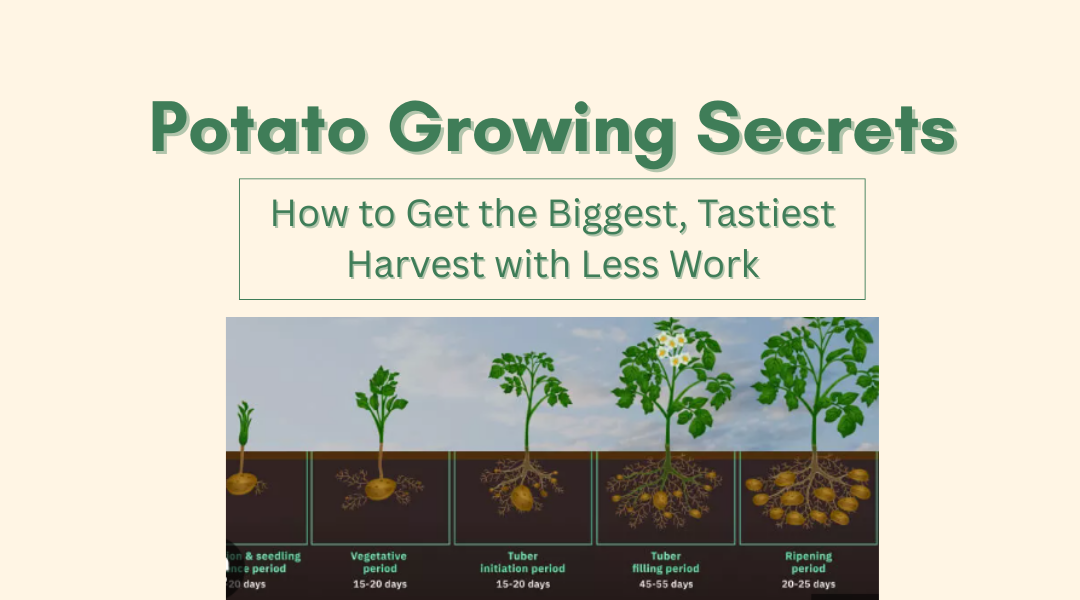
Let’s settle this right now: potatoes are the ultimate “plant it and mostly forget it” crop. But if you want a harvest that’ll make your neighbors peek over the fence with envy, there are a few tricks to stacking the odds in your favor. I’ve grown potatoes in everything from backyard plots to trash bags (yes, really), and here’s what actually works—without turning gardening into a second job.
What Potatoes Really Crave
Think of potatoes like that friend who’s low-maintenance but has a few non-negotiables. Nail these, and you’re golden:
- Water—but not like you’re trying to drown them
- Young plants are thirsty. Let the soil dry out early on, and you’ll end up with weird, knobby spuds.
- Once they’re knee-high, ease up. Overwatering now leads to rot, not riches.
- Food fit for a hungry teenager
- They’ll guzzle nitrogen early (fish emulsion or compost tea works wonders).
- When flowers appear, switch to potassium (wood ash or banana peel water) for bigger tubers.
- Frost is the silent killer
- A surprise cold snap turns leaves to blackened crisps. Keep old bedsheets or straw handy for cover-ups.
The Hilling Hack Everyone Gets Wrong
Piling soil around stems isn’t just busywork—it’s your secret weapon. Here’s how to do it without wrecking your crop:
- First hill when plants hit 4 inches: Use a hoe to drag soil up gently, burying the lower stems. This triggers more tuber growth.
- Second round at 12 inches: Add mulch instead of soil if you’re lazy (I am). Straw keeps weeds down and makes harvesting stupidly easy.
- Skip the backache: Wider rows (3 feet apart) mean you won’t stab hidden potatoes when hilling.
Pro tip: If your soil’s crap, hill with compost. Your potatoes will taste like they’ve been blessed by the garden gods.
Frost Damage? Don’t Panic
Left your plants uncovered during a cold night? I’ve been there.
- If leaves look fried: Snip off the dead bits. The plant will rally.
- If it’s a hard freeze: Mound soil over the whole plant like a burial. It’ll resurface in a week, good as new.
Feeding for Maximum Spuds
Forget complicated fertilizer schedules. Here’s the lazy gardener’s approach:
- At planting: Throw a handful of bone meal in the hole. Slow-release nutrients = less work later.
- Mid-season: Side-dress with compost when flowers appear. No compost? Soak seaweed in water for 48 hours—it’s like steroids for potatoes.
- Avoid: Fresh manure (causes scab) and miracle-gro types (all leaves, no tubers).
Watering Like You Mean It
- Best tool: A soaker hose snaked under mulch. Set a timer for 30 minutes weekly and walk away.
- Test: Stick your finger 2 inches down near the plant. Dry? Water. Damp? Back off.
Companion Planting: The Good, the Bad, and the Useless
Some plants are potato BFFs; others are frenemies. Here’s the real-world breakdown:
Plant nearby:
- Bush beans: Fix nitrogen + repel Colorado potato beetles (those striped jerks).
- Horseradish: Deters pests and makes your harvest smell like a fancy steakhouse.
- Marigolds: The bouncers of the garden—nematodes hate them.
Keep far away:
- Tomatoes: They share diseases like bad office gossip.
- Raspberries: Attract every potato pest within a 5-mile radius.
- Sunflowers: Secretly wage chemical warfare on your tubers.
The Flower Debate
Those pretty potato blooms? They’re a sign tubers are forming. But if berries appear:
- Snip them off: They’re energy hogs and contain solanine (same toxin as green potatoes).
- Ignore the myth: Flowers don’t “steal” from tubers—that’s garden folklore.
Harvest Like a Pro
- New potatoes: Start stealing a few when plants flower. Use your hands—no tools needed.
- Mature spuds: Wait until tops die back completely. Dig on a dry day, and let them cure in the shade for 2 hours before storing.
Final Wisdom:
Potatoes thrive on neglect with occasional bursts of attention. Get the water and hilling right, throw in some strategic plant buddies, and you’ll be drowning in spuds by season’s end. Now go forth and grow—preferably while sipping iced tea instead of sweating over a shovel.